Human
Why do I feel guilty for stepping back from my business?
Because doing the work was the job for years, and the feeling has outlasted the stage. In the early years your hands were the business. Once there is a team and a system, your judgement is worth more than your hours, and stepping back becomes the work rather than an escape from it.
What actually changes when an owner builds capability
Confidence is what owners hope for when they apply, what rises mid-program, and what they credit at the end. Capability is what turns that confidence into decisions that hold. This is what we've seen change, in feedback from the people we've supported.
What if I have already tried business coaching?
Coaching does what coaching is good at, and the research backs it. The difference here is what you leave holding. If the artefacts, the system and the Business Brain are yours, you can change them next quarter without buying the fix again. That's a structural difference in ownership rather than a comment on your last coach.

Why am I so tired of making decisions in my business?
Because you're making more decisions than any one person can make well, and most of them don't need to be yours to make. Decision fatigue is a structural issue, a sign that every choice in the business still comes through the owner. The fix is to build the defaults and delegation that take the small decisions away from you .

Why do I feel like I am falling behind when the business is doing fine?
The feeling usually comes from a gap between how far the business has grown and how much room you have had to grow with it. The numbers can look healthy while you privately feel stretched, unsure or behind. That is a human capability signal, and it is one of the most common experiences among capable owners.
The Capability Era
Knowing what to do no longer determines whether anything happens. Why the Information Age has given way to the Capability Era, and what it demands of business owners.
What type of business leader are you?
Buy the answer, be taught the answer, or learn how to know what to do. The three ways business leaders develop knowledge, and which one pays off in the long run.
Leadership
How does a business vision improve everyday decisions?
A business vision improves everyday decisions by giving you a fixed point to measure choices against, so the answer to most requests becomes obvious and can be answered quickly. Written as a description of what you want the business to make possible, it works as a filter on offers, hires, technology and time.
How do I know if I am the bottleneck in my own business?
Your business depends too much on you when decisions queue behind you, work slows while you are away, and nobody can answer a customer question without checking first. Two of those three in a normal week is the answer, and it is a design result rather than a personal failing, so it can be changed.

How do I delegate without losing control?
You keep control by writing the standard down, then handing over the decision rather than the task. Delegating tasks leaves you as the approver, so the queue stays. Define what good looks like, name the limits someone can decide inside, agree how you will check, and let the work run without you.

How do I move from running everything to leading the business?
By changing what you optimise for. The doer optimises for output. The architect optimises for the system that produces output. The move is a capability shift, from being the person the business depends on to designing a business that runs on clear direction, written reasoning and people trusted to decide.

Why will my team not make decisions without me?
Usually because the business has not yet made clear what your team is allowed to decide, on what basis, and what happens if they get it wrong. When those three things are unspoken, checking with you is the safe option, so they check. This is a leadership capability, and it is faster to build than most owners expect.
Business

What is the small business capability gap?
A small business capability gap is the distance between what your business needs to do to grow and what it can reliably do without the owner in the middle of it. You identify yours by looking for the tasks that only work when you do them, the ones that stall when you step away.
How do I identify the real constraint in my business?
The real constraint is the one part of your business that sets the pace for everything else, and you find it by tracing where work waits rather than where it hurts. Follow the queues, the rework and the decisions that stall, then test the one you think is binding before you spend money anywhere else.
How does a business model affect owner capacity?
Your business model sets a ceiling on your capacity before effort gets a say, because what you sell, who you sell it to and how you deliver it decide how many hours the business needs from you. Change the model and the hours move. Change your habits inside the same model and they usually do not.

What are the stages of business growth?
The five stages of business growth are Existence, Survival, Success, Take-Off and Resource Maturity. Each stage changes what the business needs from its owner, and knowing which stage you are in tells you what to build next.

Why has my business stopped growing?
Usually because the way of working that built the business has reached its ceiling. The plateau is a stage signal, common after early success. Operational competence gets a business to steady ground, and growing beyond it asks for a different capability, so growth returns when the owner builds the next layer instead of pushing harder on the last one.
How long does it take to see results from a business program?
It depends on what you count as a result, and on whether the program measures anything at all. In our eight-week program most owners leave with decisions made and a plan they are using, a smaller number see a commercial change inside the eight weeks, and the larger financial results build over the quarters that follow.
How do I know whether I need to hire?
Run the test before you post the ad. If the work that's drowning you has no written process, hiring buys you a second person doing it from memory. Count the hours, check whether the work is repeatable, and decide between systemising, automating and hiring. Most owners need the system first, and a smaller hire second.
What is the difference between the Next-Level Growth Program and Lead with AI?
The Next-Level Growth Program builds the system your business runs on. Lead with AI takes a business that already has that system and redesigns it to be AI-native, building your own workflows and tools on top. One is the foundation and the other is the multiplier. The Capability Snapshot reads which one your business is ready for.

Why does innovation matter for a small business?
Because the conditions your business runs in keep changing, and innovation is simply the capability to keep pace. It is not about being flashy or first. It is the steady ability to improve how you work and what you offer, so the business stays fit as the world moves.

Who created the five stages of small business growth?
The five stages of small business growth were defined by Neil C. Churchill and Virginia L. Lewis in a 1983 Harvard Business Review article. The five stages are Existence, Survival, Success, Take-Off and Resource Maturity, and each one asks something different of the owner.

Why don't customers see the value in what I offer?
Usually because the value is clear to you but has not been made clear to them. Owners tend to describe what they do, when customers buy the outcome it gives them. Getting your value proposition sharp, before you build more, is what makes the offer make sense to them.

Why does my business get busier without getting better?
Because activity and progress are not the same thing, so a full day can produce motion without producing money. When sales, pricing, delivery and operations are each working hard without working together, effort leaks at the joins, and the answer is to connect the parts rather than add more hours.
Being a B Corp saved our business
Having a purpose and being driven to make impact helped 25eight forge through a tumultuous time for many SMEs. How B Corp thinking guided the decisions that mattered.
Why innovation is vital for SMEs
Innovation gets bandied about a lot, especially by corporates and the media. What it actually means for a small to medium-sized business, and why it matters.
Community
What do customers actually check before they choose you?
They check before they enquire, and they check sources you don't always control: search results, reviews, your last few posts, whether your details match across sites, and who else vouches for you. Assume the decision is largely made before first contact. That makes verifiable proof part of how you grow rather than a compliance chore.
How do I get customers without relying on referrals?
Build one repeatable way for the right customers to find you that doesn't depend on you being in the room. Referrals are just one part of your system because they can stop when you get busy. The fix is a small, consistent pipeline: clarity about who you serve, one channel done really well, and a simple rhythm.
What actually is my brand?
Your brand is not your logo or your colours. It is what people say about you when you are not in the room. It is built by the experience you consistently give and the value people feel, and it is the quiet engine that brings the right customers to you.
What do people say about your business when you're not there?
Your brand is what people say about you when you are not in the room. It is the perception people hold of your business, built from every interaction and shaped by what you stand for and how consistently you express it. In the AI age, that room now includes AI, so a clear, distinctive, consistent brand matters more than ever.

What makes a good marketing strategy for a small business?
A good marketing strategy is a clear answer to three questions: who the business serves, why they should choose it, and where they will hear about it. It fits on a page and guides every marketing decision. Most small business marketing underperforms because tactics were chosen before those three answers existed.

Why do I keep attracting the wrong customers?
Usually because your business has not yet made clear, to the market, exactly who it is for and what it is best at. When the signal is broad, you attract broadly, which means price-shoppers and poor-fit work. Getting specific about who you are for is what brings in the customers, and the partners, who value what you do.
When capability leaves, it doesn't come back: what small business loss actually costs
When a small business closes, its capability leaves the community and rarely comes back. What that loss actually costs, and what owners, communities and governments can do.
The single most important factor to the success of your business
Product-market fit is the single most important factor in whether a business succeeds. What it is, why it slips, and three things you can do today to prioritise it.
Capacity
What should I systemise first?
Systemise the thing that breaks when you have a good month, before the thing that annoys you most. Order matters more than tooling. The first system should protect delivery and cash when demand spikes, the second should take the recurring decisions off your desk, and only then is it worth automating the admin. This guide gives you the order, a way to find yours, and a worked example.

What do I do when the business grows faster than I can keep up?
Build the operational foundations that create breathing room, before adding more hours. Demand outrunning capacity means the business has earned more than its systems can carry, which is a good problem arriving fast. The way through is to systemise the work you repeat, delegate with a clear basis, and protect delivery first.
What does it really cost when a key person leaves?
More than the recruitment bill. When a key person leaves a small business, the capability they held often leaves with them, and it does not come back by hiring a replacement. The real cost is the knowledge, relationships and judgement that lived in one head and nowhere else.

Why do I never get to the work that actually matters?
Because the business still runs on you, so the urgent keeps crowding out the important. The work that matters is usually the work only you can do, and it is the first thing displaced when everything routes through you. Capacity is built by moving work off yourself deliberately, not by finding more hours.
Digital & AI

AI for small business
AI for small business means applying artificial intelligence to a specific business problem, in a business with the foundations to use it well. The value is real for most small businesses, and it comes from the capability to use AI deliberately rather than from the tool itself. This guide covers what AI can do, what it costs, and where to start.

How to use AI in a small business
A small business uses AI best by pointing it at one real task it already does: drafting admin, repurposing marketing, answering customers faster, analysing what is working. The value comes from a person checking every output, and from starting with one task rather than a pile of tools.

What can AI do for a small business?
AI is very good at language tasks: drafting, summarising, rewriting, answering questions and spotting patterns in text. It is unreliable at judgement, factual accuracy and anything that needs context it was not given. Knowing which side of that line a task sits on is the difference between AI helping you and AI causing problems.

Is AI worth it for a small business?
For most small businesses, yes, when AI is pointed at one specific, repetitive task inside a process that already works. Not yet, when it is bought because everyone says to. The subscription is the smallest cost. The return is measured in hours back and better decisions, and only the businesses that count it actually see it.

Is it safe for a small business to use AI?
AI can be safe for a small business with a few basics in place: know where your data goes, keep sensitive information out of public tools, and set simple rules for your team. The risks are real but manageable. Most are covered by a short AI use policy and a habit of reviewing output before you rely on it.

Is your business ready for AI?
A business is ready for AI when four things are in place: clean-enough data and a documented process, a specific problem worth solving, the capability to judge the output, and light governance for how AI is used. If any is missing, that is where to start before the tools.

What to put in place before you use AI
Before you use AI, put five foundations in place: a solid strategy, a specific problem to solve, organised information, simple repeatable processes, and basic rules for data and review. AI amplifies whatever is already there, good or bad, so these foundations decide whether it helps or compounds the mess faster.

AI governance for a small business, without the bureaucracy
AI governance for a small business needs three things: a short AI use policy, a few clear rules about data, and the habit of reviewing AI output before it is used. That is enough to keep a small team safe and consistent, without the bureaucracy a large organisation carries.

The real cost of AI in business
More than the subscription. Behind every prompt sits an energy and water cost, behind every tool a question of where your data lives, and behind every poor use the cost of getting it wrong. Here are the four costs that matter, and the habits that keep them honest.

Responsible AI for a small business: a practical guide
A small business uses AI responsibly by keeping four commitments: protect people's data, be honest about when AI is involved, keep human judgement in charge of decisions that affect people, and stay mindful of AI's environmental cost. Responsibility and benefit do not have to conflict; the considered user aims for both.

How to use AI for small business marketing
Use AI in marketing to generate ideas, draft posts and emails, repurpose one piece of content into many, and plan a content calendar. It works best as a drafting partner, with you keeping the brand voice and reviewing everything before it goes out. The strategy and the judgement stay yours.

How AI can save time on admin in a small business
AI can save a small business hours each week on admin by drafting emails and documents, summarising long threads and meetings, organising information and handling repetitive writing. It works best on routine, low-risk tasks, with a quick human check before anything important goes out. The aim is to free the owner for the work only they can do.

How to use AI for customer service in a small business
Use AI to draft replies, speed up routine responses and build first-pass FAQs, while a person keeps charge of judgement, tone and care. AI handles the routine and the drafting; humans handle the moments that build or break trust. The personal relationship is your advantage, and AI should protect it.

An introduction to AI for small business
Start by understanding how AI actually works before you choose any tool. A small business that grasps the basics, meaning what AI, machine learning and large language models are, how they are trained, and where they go wrong, makes far better decisions than one that starts with software. This page covers those foundations in plain language.

What is local AI for a small business, and is it worth it?
Local AI is an AI model that runs on hardware you control, so your data never leaves the business. It is worth it when you do repetitive, defined work on sensitive or proprietary data often enough to feel the per-use cost of cloud tools. For occasional general use, cloud AI remains the easier choice.

What order should a small business adopt AI in?
Foundation first, workflow second, tools last. Most AI disappointment comes from running that order in reverse, buying the tool before the underlying work is clear. AI multiplies whatever sits underneath it, so a modest tool on a clear process will outperform a powerful tool on a messy one, every time.

Will AI actually work in a business like mine?
Probably, although possibly not yet, and the deciding factor is rarely your industry. AI works where there are decisions and knowledge written down for it to draw on. More than half of Australian small businesses that have not adopted AI say it is not relevant to them, and relevance usually turns out to be a question of foundations.
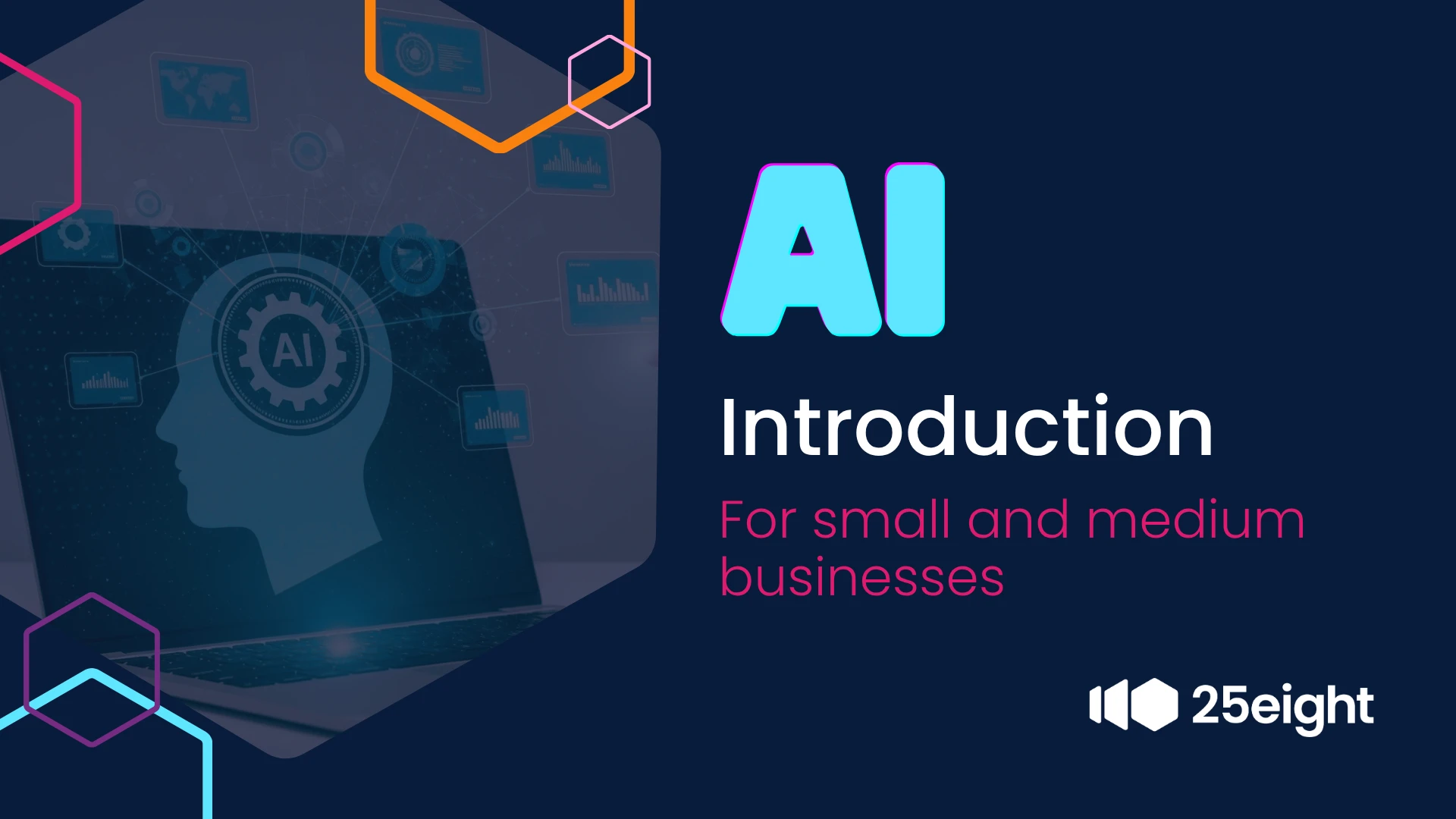
Introduction to AI for Small Business. The video series.
AI explained in plain English, in short videos presented by our CEO Sam Hurley. Includes a free AI Use Policy template and AI Use Checklist.

What is a Business Brain and does my business need one?
A Business Brain is the place your business keeps its own knowledge: how you price, what good looks like, how you decide, who does what and why. It has two layers, a private one that holds your judgement and a shared one your team runs on. It is worth building once you have decisions worth writing down, and it is what makes AI useful rather than merely fast.

Why can't I get good results from AI?
AI multiplies whatever it is pointed at, so when you get mediocre results there is probably a capability gap underneath the tools that needs fixing first. This page explains how AI is a multiplier, the four layers underneath it that it draws on, and the fastest way to get better outputs for your small business.
The Capability Shift: why sovereign compute, regional infrastructure and local AI now matter for regional economies
AI is reshaping where capability sits, where data lives and who controls it. Why sovereign compute, regional infrastructure and local AI now matter for regional economies.